“Are you under a lot of stress?” she asked.
“How can you tell?” I replied.
“Your stitches are very, very tight,” she said.
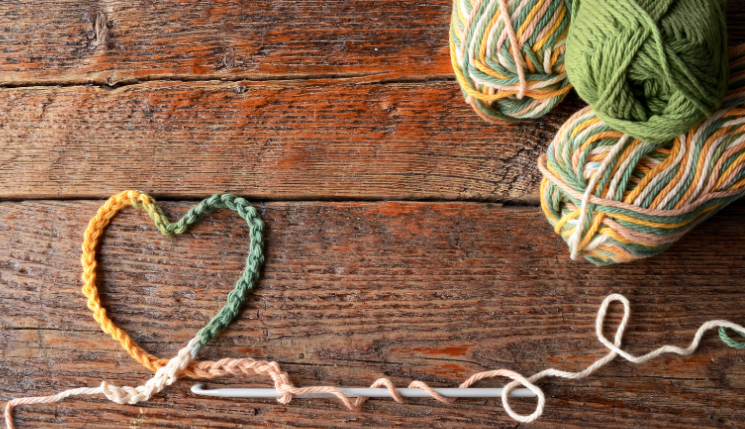
When I left teaching, I didn’t go right into another job. I went to real estate school. I had more time on my hands than I knew what to do with. I took up an old hobby my grandmother taught me: crocheting. The mindless task of crocheting forced my mind to think of, well, nothing except one more yarn over, one more pull-through. I was making something that someone could wear as a hat. Or a scarf. Or a sock. I hadn’t decided.
What I did decide was that I needed guidance. I enrolled in a crochet class and met a lovely woman who assessed my hatscarfsock. I told her my hands and fingers were killing me. She wasn’t surprised.
It’s funny how physical crocheting became. My hands knew what my mind wouldn’t admit. How I got there requires a bit of a backstory.
Performing vs Flourishing
I got to the point in my career in public education where going to work didn’t feel good. I got my master’s degree in counseling so I could work with clients one-on-one or in groups. After completing my internship at a local alternative high school for kids who didn’t fit the traditional model, I decided to stay in the school system. Unfortunately, I spent most of my days writing schedules and helping students get into college. It was far from the meaningful work I was doing during my internship. I performed my job well, but I wasn’t flourishing.
The Escape Hatch
What could I do for a living that would help me flourish again? What would I be happy doing the rest of my life? Where could I make a real difference? I didn’t ask any of those forward-moving questions. I only asked one: “How can I get out of where I was?” Becoming a real estate agent was not a dream come true. It was an escape hatch. For 15 years I performed well, built wealth, and traveled the world.
Being an agent had meaningful moments. I solved complicated real estate problems and guided first-time homeowners to buy their first home. But I still wasn’t flourishing.
We Think We Know Ourselves
I was training for an over-55 Masters Figure competition in Pittsburgh when COVID shut the world down. It turned my world upside down in a way I couldn’t have predicted. All the time and energy I had spent learning about myself could not produce what silence finally revealed.
In this silent space, I felt peace and happiness like I had never felt before. While the world was living through tremendous uncertainty and loss, the sudden quiet revealed something unexpected about me. And it made so much sense.
I am an introvert.
For years, I struggled to say yes to social gatherings. They were fine for about an hour, then I overloaded. While my husband was having the time of his life, I wanted to crawl into bed and read a good book.
During COVID, I got back all my quiet moments. I read for hours. I hiked with a few good friends. I was flourishing. During that season, at 55, I decided to go back to school and get my doctorate. It was the best forward-moving decision I’d ever made. This time I wasn’t running from something. I was running toward it.
I could finally put my education to good use. I wanted to coach, speak, and serve other women. I wanted to inspire them to flourish. Seven years earlier, during an interview at my IFBB pro debut, I had promised that I would use my experience to help other women believe more was possible for them. Now I finally understood what that promise could become.
Research by organizational psychologist Tasha Eurich suggests that while most people believe they are self-aware, only 10 to 15 percent may meet the criteria. I assumed I was one of them.
While I felt like I had a pretty good handle on internal self-awareness, I was so busy life-ing, I didn’t take the time to listen. When the entire world shuts down, I couldn’t help but listen.
Now, I ask what will move me forward, not how I can get out. My husband and I have learned to respect how we recharge. He loves being around a lot of people. I like being around a few people I’ve chosen. I’ve learned to be intentional about who gets my time—not because I’m exclusive, but because I function better with depth than breadth. I’d rather have lunch with three people, not thirty.
And I’m back to crocheting. My stitches have loosened, and my fingers no longer hurt. More importantly, people can finally recognize what I’m making. It turns out that when I stopped gripping everything so tightly, I made room for something better.
A question to ponder:
What is something you learned about yourself later in life—and what changed once you finally listened? 😊 (P.S. I read every comment)